Ever since typewriters became widely available people have found ways to manipulate them. Enterprising amateur artists, perhaps bored at work, used the rigid keys to mold numbers and letters into intricate drawings of butterflies and airplanes—an impressive, if predictable, show of precision and patience. Yet the typewriter art we all know now—the abstract compositions, the Beat Generation-associations—didn’t fully emerge until the 1950s, several decades after the typewriter had hit the market. And for that, says Jen Inacio, curator at Pérez Art Museum Miami, we have the concrete poetry movement to thank.
Inacio and her colleague René Morales curated the show From the truer world of the other: Typewriter Art from PAMM’s Collection, opening next week at PAMM, which explores the works of 15 visual artists and poets who used the typewriter as an artistic medium. The museum culled the pieces from their own collection, recently acquired by the Miami-based Sackner Archive of Concrete and Visual Poetry, an enormous archive of works from the concrete poetry movement. As Marvin and Ruth Sackner told The Atlantic a few years ago, they started building the collection without knowing exactly what the text-based pieces were; it wasn’t until 1979 that they heard the term “concrete poetry” to describe works that use typographical elements to convey artistic meaning. When the movement flourished in the ’50s and ’60s, it gave new meaning to typewriters, too: the widely accessible machines provided a cheap, albeit painstaking way to express this new poetic form.
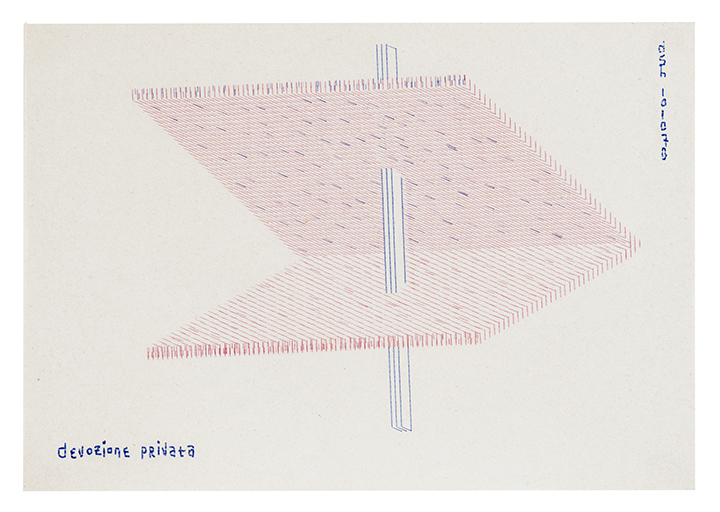
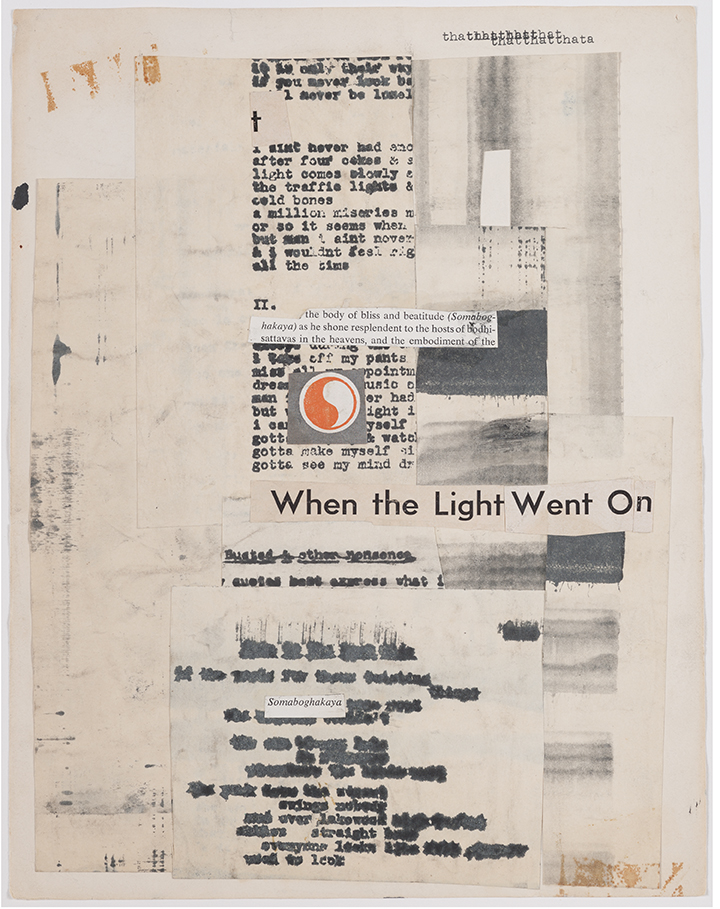
This is when typewriter art moved from kitschy representational images to a serious art form. It was an economically feasible medium for many artists; cheap to produce, it didn’t require a lot of space or supplies—just a typewriter. In the hands of artists and poets, the humble machine yielded works that are “so meticulous, systematic, almost mathematical—from these crazy geometric abstractions and optical illusions, to pieces that are highly experimental,” says Inacio.
This new art form was also incredibly labor-intensive. It takes an unusual level of obsession and patience to be able to make something graphically interesting solely using lines of type. But as any artist working today with code—or who is attracted to the limitations of computer programs, or even the vintage allure of the risograph printer—knows, constraints in artistic practice can be a boon.
“With the works we have in the exhibition, you’re able to see things you wouldn’t think could be done with a typewriter,” says Inacio. “You think, ‘they are really pushing the boundaries of the typewriter.’ But they can only push it so far, and these artists were seduced by that limitation. They were really pushing all the way to the edge, to ‘how far can this go?’”
We asked Inacio to show us the answer through the works of four artists in the show.